Physical Address
304 North Cardinal St.
Dorchester Center, MA 02124
Physical Address
304 North Cardinal St.
Dorchester Center, MA 02124

A deep dive into how institutional capital is positioning for AI's most critical bottleneck—and what the dark pool data reveals about Bloom Energy's trajectory.
Smart Money Macro Series | January 28, 2026
A deep dive into how institutional capital is positioning for AI’s most critical bottleneck—and what the dark pool data reveals about Bloom Energy’s trajectory.
Forget the GPU shortage. Forget the chip wars. The real constraint throttling AI’s explosive growth isn’t silicon—it’s electricity.
While Wall Street fixates on Nvidia’s next architecture and whether Big Tech will ever monetize their $400 billion-plus annual AI investments, a quieter crisis is unfolding behind the data center walls. And it’s creating one of the most asymmetric opportunities in the market.
The International Energy Agency projects global data center power demand will more than double from approximately 415 TWh in 2024 to 945 TWh by 2030 under its base-case scenario. Under its “AI lift-off” scenario, that number hits 1,250 TWh—a 200% increase in just six years.
But the raw growth figures obscure the real problem: timing.
Deloitte estimates AI data center power demand will surge 30-fold by 2035, from 4 GW in 2024 to 123 GW. Boston Consulting Group forecasts 45 GW of growth in just three years. Meanwhile, the PJM Interconnection—home to “Data Center Alley” in Northern Virginia—fell 6.6 GW short of reliability requirements in its latest capacity auction.
ERCOT’s interconnection queue in Texas has ballooned to 226 GW, nearly quadrupling from 63 GW at the end of 2024. Of that total, approximately 165 GW comes from data center projects targeting approval by 2030. ERCOT added only 23 GW of new capacity in 2024-2025—about 10% of queued demand.
The grid cannot scale fast enough. Nuclear plants take a decade to build. Gas turbines face years-long backlogs. Grid interconnection queues stretch for years. And every month of delay for Big Tech means billions in stranded capital sitting in data centers that can’t power on.
As Amazon CEO Andy Jassy stated plainly: “The single biggest constraint is power.”
This isn’t a theoretical future concern. Nvidia’s Blackwell GPUs require 120-140 kW per rack—a 2x increase from the H200. By 2027, rack-scale systems will demand 300-600 kW. Most existing data centers simply cannot provide this power density.
The hyperscalers are desperate. Microsoft needs “power in specific places” at unprecedented scale. Google Cloud’s Thomas Kurian acknowledges that “more powerful chips take a lot more power. And power is, in many cases, a short resource.”
This is why Bloom Energy’s stock has become a proxy for AI infrastructure itself—and why institutional money is flooding in.
Bloom Energy was founded in 2001 by KR Sridhar, an aerospace engineer who once worked with NASA on technology to convert CO2 to oxygen for potential Mars colonization. When the space race cooled, Sridhar pivoted to solving Earth’s energy challenges.
The company’s core technology is the solid oxide fuel cell (SOFC)—a mature electrochemical platform developed over two decades that converts natural gas, biogas, or hydrogen into electricity without combustion. The result: cleaner power with 15-20% lower fuel consumption than gas turbines, easier permitting due to reduced emissions, and critically, deployment timelines measured in months rather than years.
The competitive advantages are structural:
TIME Magazine recognized Bloom’s fuel cell platform as one of the Best Inventions of 2025, validating its position as the leading stationary power solution.
Bloom’s financial performance reflects its commercial momentum:
The company remains GAAP unprofitable due to stock-based compensation, but CEO Sridhar insists: “We are not one of these companies that has to invest, invest, invest. We’ve already done that part the last 20 years. We have the flywheel spinning already.”
When analyzing any momentum stock, the critical question is whether retail enthusiasm is leading institutional capital—or following it. In Bloom Energy’s case, the evidence points decisively to the latter.
The institutional validation has come through concrete, multi-billion-dollar commitments:
Brookfield Asset Management ($5 Billion Partnership – October 2025)
Brookfield announced a landmark partnership making Bloom Energy the preferred onsite power provider for its global AI factories. This wasn’t speculative capital—it was one of the world’s largest alternative asset managers betting on Bloom as critical infrastructure.
American Electric Power ($2.65 Billion Deal – January 2026)
In January 2026, AEP disclosed it exercised a substantial portion of its 1 GW purchase option in a $2.65 billion transaction. The fuel cell generation facility will be located near Cheyenne, Wyoming, with a 20-year offtake agreement already secured. This single deal represents roughly 1.5x Bloom’s entire 2025 projected revenue.
Oracle, Equinix, and Beyond
Major data center operators including Oracle and Equinix have signed deals, with Bloom proving it can deliver at hyperscaler speed and scale.
Institutional ownership in Bloom Energy sits at approximately 52% of total shares, with major holders including:
Recent 13F filings show continued accumulation by institutional buyers. In September 2025, Morgan Stanley and Barclays were identified as accumulating shares, preceding a significant price surge.
Dark pool transactions—large block trades executed off public exchanges—often signal institutional accumulation or distribution before major price moves. For Bloom Energy, the pattern has been clear:
Throughout 2025, institutional dark pool activity preceded each major catalyst:
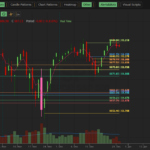
For traders seeking to track this activity in real-time, MobyTick’s Print Lookup screen provides visibility into large block trades, allowing you to see where institutional capital is flowing before the news breaks.
Bloom Energy’s price action tells a story of explosive re-rating as the market awakened to the AI power thesis.
The stock exhibited a classic “staircase” accumulation pattern through 2025, with each major deal announcement creating a new higher floor:
No honest analysis can ignore the risks. Bloom Energy’s valuation has stretched to levels that make even bulls uncomfortable.
The numbers are stark:
Insider transactions have skewed heavily toward sales in recent months. While some selling is expected as executives diversify after a 10x run, the pattern warrants monitoring. Insider selling doesn’t necessarily indicate fundamental problems—but it does suggest insiders believe the stock is fairly to fully valued.
Bloom remains GAAP unprofitable. While non-GAAP metrics look healthier, the company must demonstrate sustainable GAAP profitability to justify its valuation multiple.
If AI investment slows, data center buildouts could decelerate. The stock’s correlation to the AI narrative creates significant downside risk if sentiment shifts. Any “AI winter” would hit Bloom Energy hard.
Despite the risks, the institutional thesis for Bloom Energy rests on a fundamental mismatch: AI infrastructure demand is growing exponentially, while power supply can only grow linearly.
For Bulls: The AEP deal at $2.65 billion represents transformative revenue backlog. If execution continues and additional mega-deals materialize, the stock could re-rate higher despite current valuations.
For Bears: The risk/reward at $156 looks challenged given analyst targets clustering around $80-120. A pullback to the $100-120 zone would offer better entry points.
For Swing Traders: Watch institutional flow closely. Dark pool activity and block trade patterns have consistently preceded major moves. MobyTick’s Print Lookup screen provides the visibility needed to track smart money positioning in real-time.
Bloom Energy sits at the intersection of AI’s most pressing constraint and the capital formation required to solve it. The company’s 24-year journey from NASA spinoff to $28 billion market cap reflects a thesis that’s been validated by some of the world’s largest institutional investors.
The macro setup—AI demand outstripping grid capacity by orders of magnitude—creates a structural tailwind that could persist for years. The institutional proof—$5 billion from Brookfield, $2.65 billion from AEP—confirms that sophisticated capital sees Bloom as critical infrastructure rather than speculative play.
But the valuation demands respect. At 1,000% returns in 12 months, the stock has discounted significant future growth. The bear case isn’t dismissible—it’s mathematically grounded.
For those who believe AI infrastructure buildout will exceed current expectations, Bloom Energy offers leveraged exposure to the thesis. For those concerned about execution risk and valuation, the sidelines or smaller position sizes make sense.
What’s undeniable: the smart money has spoken. Following that institutional flow—through dark pool analysis, 13F tracking, and deal flow monitoring—offers the clearest signal of where the market’s most sophisticated participants see value.
Data Sources: IEA Energy and AI Report, Deloitte AI Power Demand Analysis, Boston Consulting Group, Goldman Sachs Research, Bloom Energy SEC Filings, Reuters, Seeking Alpha, Fortune, Company Press Releases, MobyTick Dark Pool Analytics, Polygon.io Price Data
Track institutional block trades and dark pool activity with MobyTick’s Print Lookup Screen — Follow the smart money.
Disclaimer: This analysis is for informational purposes only and does not constitute investment advice. The author and MobyTick may hold positions in securities mentioned. Past performance does not guarantee future results. All investments carry risk of loss. Do your own research before making any investment decisions.