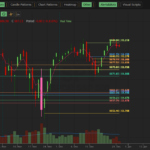
This is part one of two. The companion piece — How to Actually Build a Tokenization Portfolio — takes the same thesis and turns it into a construction framework: the screen, the basket, and why the obvious ETF won’t work.
TL;DR — The 60-Second Version
- On September 17, 2026, the SEC issued something called the “Innovation Exemption” — a five-year permission slip that lets certain blockchain-based venues trade real U.S. stocks as digital tokens.
- Crypto-adjacent stocks ripped. Gemini +31%, Securitize +21.7%, Strategy +16.4%, MARA +13.7%, Coinbase +11.7%.
- But the rally was partly backwards. The new rules specifically exclude the kind of tokenized stocks Robinhood and Kraken currently offer, and specifically favor the kind Securitize and Superstate offer.
- The dark pool data is the real story. Institutions were quietly loading up on Hyperliquid Strategies (PURR) at $7.20 in August and added 1.5 million shares at $11.20 — two days before the SEC announcement.
- Meanwhile, the biggest institutional money in this entire theme went somewhere nobody’s talking about: ICE, the company that owns the New York Stock Exchange, absorbed roughly $1 billion of block trades between June and September — including half a billion dollars in just two prints, both before the announcement.
- Securitize (SECZ) had roughly 830,000 shares bought up between $5.44 and $6.40 during its August earnings crash — and its largest block ever printed at $10.05 on the breakout.
- Several names that rocketed on the news — Gemini and StablecoinX (USDE) — have no meaningful institutional buying underneath them at all.
Part 1: Start Here — What Is a “Tokenized Stock,” Really?
If you’ve never touched crypto, this section is for you. If you already know, skip to Part 2.
The problem with how stocks work today
When you buy 100 shares of Apple, you don’t actually get a certificate with your name on it. What happens is genuinely strange once you look at it:
- Your broker executes the order.
- The trade goes to a clearinghouse called the DTCC (Depository Trust & Clearing Corporation).
- The DTCC’s subsidiary is the registered owner of essentially all publicly traded U.S. stock.
- Your broker has a book entry saying they own some of it, and their book entry says you own some of that.
You own a claim on a claim on a claim. And it takes a full business day to settle — what the industry calls T+1. The market closes at 4:00 p.m. Eastern and doesn’t reopen until 9:30 the next morning. If news breaks at 8 p.m., you sit on your hands.
That system was built when trades were confirmed on paper. It works. It’s also expensive, slow, and closed most of the time.
What tokenization changes
A tokenized stock is a share of a real company represented as a token on a blockchain — a shared digital ledger that updates in seconds and never closes.
Think of it like the difference between a bank wire and a text message. Both move information. One takes three days and goes through four intermediaries. The other is instant and direct.
The SEC’s own fact sheet listed the benefits it sees in this technology: investors holding their own assets directly (self-custody), around-the-clock trading, fractional ownership of shares, near-instantaneous settlement, better efficiency and greater transparency.
The catch: not all “tokenized stocks” are the same
This is the single most important thing in this article, and almost every headline missed it.
There are two completely different products both being called “tokenized stocks,” and they are not close to equivalent:
| Synthetic / Wrapper Tokens | Real Onchain Shares | |
|---|---|---|
| What it is | A token that tracks the price of a stock | An actual SEC-registered share, recorded on a blockchain |
| Who legally owns the share? | A broker or special-purpose vehicle | You do — you’re on the shareholder register |
| Do you get voting rights? | No | Yes |
| Do you get dividends? | Usually passed through, not guaranteed as a right | Yes, as a legal right |
| Who offers it | Robinhood, Kraken (xStocks), Ondo Global Markets | Securitize, Superstate, Figure, Dinari |
| Available to U.S. retail? | Mostly no — offshore only | Limited, expanding |
| Allowed under the new SEC rules? | NO | YES |
Caption: Providers such as Robinhood, Kraken’s xStocks, Ondo Global Markets and Coinbase have been developing tokens that mirror the prices of U.S. stocks while legal ownership stays with a broker or SPV. Platforms such as Securitize and Superstate issue SEC-registered onchain shares where token holders are recorded as shareholders and keep voting, dividend and corporate-action rights.
Hold that distinction. It explains why the stock market’s reaction on Thursday was partly wrong.
Part 2: What the SEC Actually Did on September 17
The order
The SEC issued Exchange Act Release 34-106402, nicknamed the “Innovation Exemption.”
In plain English, it does two things:
1. It lets certain venues operate without registering as a stock exchange.
Normally, if you bring buyers and sellers of securities together, you’re an “exchange” under the Securities Exchange Act of 1934, and you have to register as one. That’s an enormous regulatory lift. The order carves out a new category — a Tokenized Securities Venue (TSV) — and exempts it from that definition for five years, so long as it follows a specific set of rules.
2. It lets certain firms provide liquidity without registering as a dealer.
If you post buy and sell prices for a living, you’re typically a “dealer” and need to register. The order grants a parallel exemption to firms supplying liquidity to these new venues using their own capital, as long as that’s essentially all they do with securities.
Why now?
Timing matters here. Congress had just failed to advance the CLARITY Act — the big crypto market-structure bill — in a Senate procedural vote that came up short at 49 in favor, 50 against. The SEC moved two days later using its own existing statutory authority rather than waiting for legislation.
SEC Chairman Paul Atkins framed it as bringing America’s capital markets into the digital age within the Commission’s statutory authority, while it considers whether more durable rulemaking is needed.
How We Got Here: The Road to Onchain Stocks
Dec 11, 2025
DTCC gets SEC no-action relief for a three-year tokenization pilot
Jan 2026
Figure launches OPEN network — natively blockchain-registered equities
Mar 18, 2026
SEC approves Nasdaq’s tokenized securities trading rule
Apr 17, 2026
SEC approves NYSE’s equivalent rule change
May 2026
Innovation Exemption delayed after pushback from traditional exchanges
Jul 2, 2026
Securitize IPOs on NYSE and tokenizes its own stock the same day
Jul 2026
DTCC begins limited production trades of tokenized securities
Sep 15, 2026
CLARITY Act fails Senate procedural vote, 49–50
Sep 17, 2026
SEC issues the Innovation Exemption
Oct 2026 (planned)
DTCC full tokenization platform launch
The rules, translated
The exemption comes with conditions. They’re restrictive by design, and they’re where the investment signal lives.
| What the SEC requires | What it means for you |
|---|---|
| Limits on number of symbols and trading volume | This is a sandbox, not a market opening. Only a handful of stocks, capped volume. Revenue from this will be small at first. |
| Tokens must carry the same rights and privileges as ordinary shares | No price-tracking substitutes. Real voting rights, real dividend rights. |
| No synthetics — no tokenized linked securities or security-based swaps | Most of what’s offered offshore today doesn’t qualify. |
| Issuers get written notice and a chance to object | Apple can say no to someone tokenizing Apple. A real veto. |
| Smart contracts must be auditable, public, and on a permissionless blockchain | The code runs in the open on chains like Ethereum, Solana, or Avalanche. |
| The venue must be a U.S. person and follow OFAC sanctions rules | Offshore operators can’t just flip a switch. |
| Only permissioned (KYC’d) participants can trade | Not anonymous DeFi. You identify yourself. |
| 30 days advance public notice, plus written notice to the SEC | Nothing launches overnight. Watch for these notices — they’re the real starting gun. |
| Trading halts must mirror the primary exchange | If the stock is halted on Nasdaq, it’s halted onchain. |
| Expires in five years; SEC is taking public comment | The rules can tighten. This is explicitly an experiment. |
Part 3: The Rally — and Why It Was Partly Backwards
What moved
Crypto-linked equities surged on the news and kept going Friday.
Thursday’s Move: Crypto-Linked Stocks on the SEC News
Figures from Thursday, September 17, 2026. Several names extended gains Friday.
The part almost nobody said out loud
Look at that chart again next to the rules.
Robinhood gained 2.8%. Securitize gained 21.7%. That gap is, if anything, too small — and the direction of surprise arguably should have been larger still.
Here’s why. Robinhood’s Stock Tokens, Kraken’s xStocks and Ondo Finance’s offshore products are aimed at users outside the United States and mainly track price performance without full shareholder rights. In their current form, they do not fit the new framework. Those firms would need to redesign their products to enter the U.S. market under these rules.
Meanwhile the framework creates a clear U.S. path for exactly the kind of product Securitize, Superstate, Bullish and Dinari already build.
Robinhood’s CEO Vlad Tenev welcomed the order publicly, calling out instant settlement, 24/7 trading and fractionalization as benefits Americans can now start to see. That’s genuine — Robinhood has enormous distribution and has pushed hard into tokenization, including building its own blockchain. But distribution and regulatory fit are two different assets, and on Thursday the market mostly paid for the first one.
The uncomfortable read: the companies that got the clearest regulatory gift are small, unprofitable, and in one case shrinking. The companies that rallied hardest are mostly the ones with the biggest retail followings.
Part 4: The Dark Pool Data — Where the Real Money Went
First, what is a dark pool?
If you’re new to this: a dark pool is a private trading venue where large institutions trade big blocks of stock without broadcasting their intentions to the open market.
Why do they exist? Imagine you’re a pension fund that needs to buy 2 million shares of a stock that trades 5 million shares a day. If you put that order on the public exchange, everyone sees it, the price runs away from you, and you pay far more than you should. So instead you cross the block privately.
Here’s the crucial part: those trades still have to be reported. They show up on the public tape — just after the fact, and without the advance warning. So you can’t see institutions planning to buy, but you can see, with a short delay, exactly what price they paid and how much they bought.
That’s what the data below shows. Every number in this section comes from reported block and dark pool prints, not from speculation.
Why it matters: these price levels tend to act like magnets. When an institution buys 2.8 million shares at $7.20, that’s now a price they care about. If the stock comes back to it, they often defend it. If it breaks below, something has changed.
Finding #1: Somebody knew where to be before the news
PURR — Hyperliquid Strategies
PURR: Where Institutions Actually Bought (Block Trades, Last 90 Days)
Friday’s close: $14.09. The $11.20 print landed two trading days before the SEC announcement.
Read that bottom-to-top and the story tells itself:
- August 18: 2,879,300 shares cross at $7.20. That’s the single heaviest institutional level of the quarter — roughly $20.7 million.
- September 15: another 1,500,000 shares at $11.20, flagged as an average-price trade. That is two trading days before the SEC order was published.
- September 18: 623,895 shares print at $14.09 in two blocks at the closing bell.
Somebody built a position at $7.20, added size at $11.20 before the news, and was still transacting at $14.09 on the day. Whether that’s foresight, a well-connected read on the regulatory pipeline, or luck, the tape is what it is.
Worth being clear about what PURR actually is: despite the ticker’s prominence in the tokenization headlines, Hyperliquid Strategies is a digital asset treasury company whose business is accumulating HYPE, the native token of the Hyperliquid blockchain. It is not a tokenization company. The rally is sympathy plus token beta. More on its valuation in Part 6.
Finding #2: The biggest money went somewhere nobody’s covering
ICE — Intercontinental Exchange (owner of the New York Stock Exchange)
ICE: Roughly $1 Billion of Institutional Block Trades, June–September
Ten block levels. Dollar value in millions. Friday’s close: $155.47.
Two prints alone account for roughly half a billion dollars:
- September 8: 1,732,504 shares at $157.76 — about $273 million
- August 6: 1,512,528 shares at $149.75 — about $226 million
Both landed before the SEC order was published. So did every other print in the sequence.
Nobody wrote a “buy ICE for the tokenization trade” headline. Institutions bought it anyway, in size that dwarfs everything else in this theme combined.
The shape is worth reading carefully, because it isn’t a straight line. Roughly 1.84 million shares crossed between $139.05 and $142.25 across four sessions in early June — about $260 million in eight trading days. Price then fell roughly 14% from that zone, and on June 30 another 441,400 shares crossed at $122.20, near the low. From there it climbed back through the entire June cluster and kept going, with size increasing as it rose: $95.5M at $135.00 in July, then the two nine-figure prints in August and September.
That is not a headline chase and it isn’t a clean staircase either. It’s a position built through a drawdown and then added to aggressively into strength.
Where it sits now is the most useful part. Friday’s close was $155.47 — directly between the two largest prints in this entire theme. $149.75 sits about $6 below with 1.5 million shares behind it. $157.76 sits about $2 above with 1.7 million. Price is inside an $8 pocket defined by roughly half a billion dollars of institutional commitment.
Worth stating plainly: ICE did not rally on the news. It closed at $161.26 on September 4, printed its largest block of the year at $157.76 on September 8, and then drifted lower through the announcement itself. Price traded down into this pocket, not up out of it. That cuts both ways and I won’t pretend otherwise — either large capital that accumulated from June is now underwater on its most recent tranche and the market disagrees with the thesis, or the announcement was already in the price and the buying was finished before anyone wrote a headline. The tape won’t settle that argument. $149.75 will.
That makes the levels unusually clean. $149.75 is the line that matters on a pullback. Below it, the next real shelf is the June cluster at $139.05–142.25. Above, $157.76 is the immediate test and $161.26 is where the September buying stopped.
The logic isn’t complicated. The SEC approved NYSE’s tokenized securities rule change in April 2026. ICE owns NYSE. Whether tokenized trading happens on NYSE’s book or on a competing blockchain venue, listings, market data and volume still route through the incumbent exchange complex. ICE gets paid either way — which is also why nobody buying 1.7 million shares of it is trading a two-week window.
Nasdaq (NDAQ) shows the same shape at smaller scale — 1,100,000 shares at $89.06 (July 13), 1,094,400 at $88.40 (July 14), and 990,300 at $98.33 (August 21). The SEC approved Nasdaq’s tokenized trading rule on March 18, 2026, ahead of NYSE. Both exchanges’ rules tie into the DTCC pilot, meaning tokenized shares trade on the same order book with the same execution priority as regular shares, provided they’re fungible and carry identical rights.
Finding #3: Robinhood ran straight into a wall
HOOD
The heaviest institutional level in Robinhood stock over the past quarter sits at $118.67, where 1,354,100 shares traded on July 6.
Friday’s close: $118.60.
The stock has walked right back into the single biggest block of the quarter. Underneath it, support levels stack at $106.36 (1.01 million shares, July 21) and $95.10 (790,468 shares, August 20).
HOOD: Institutional Price Levels vs. Current Price
Friday’s close: $118.60 — right at the heaviest level of the quarter.
For context on how fast it got there: HOOD printed at $104.42 on September 16 and closed at $118.60 on September 18. A 14% move in two sessions, directly into overhead supply.
Finding #4: Two big winners have nothing underneath them
This is the part that should make anyone chasing these names slow down.
GEMI (Gemini) gained 31% on Thursday — the single biggest move in the group. Institutional block prints above 50,000 shares over the prior ten sessions: zero.
USDE (StablecoinX) went from $6.80 on September 14 to $9.55 on September 18 — roughly +40%. But the prints are all small, mostly 50,000 to 100,000 shares, and nearly all flagged as intermarket sweeps. Sweeps grab whatever liquidity is sitting across every venue at once; they’re the footprint of urgency, not of a position being built with patience. There is no single block here anywhere near the scale you see in PURR, SECZ or ICE — nothing that says a large allocator committed real capital at a chosen price.
It’s also worth asking what StablecoinX has to do with tokenized stocks at all. The company listed on Nasdaq on June 26, 2026 via a SPAC merger with TLGY Acquisition Corp, and holds roughly 3.03 billion ENA tokens — the governance token of the Ethena stablecoin ecosystem. It’s a treasury vehicle for a stablecoin protocol. The connection to onchain equity trading is thematic at best.
| Ticker | Recent move | Institutional block activity | Read |
|---|---|---|---|
| ICE | Quiet | ~$500M in 6 weeks | Strong conviction, no hype |
| PURR | Large | 2.88M shares at $7.20; 1.5M at $11.20 pre-news | Strong — accumulated early |
| NDAQ | Quiet | 3.2M shares across three levels (Jul–Aug) | Positioned earlier, not chasing |
| COIN | +11.7% | 1.29M at $188.12 (Aug 31); Friday print was a hedge | Solid base, Friday activity ambiguous |
| HOOD | +14% in 2 days | 1.35M at $118.67 — now overhead | Ran into resistance |
| BLSH | Strong | 224,559 shares at $38.34 Friday close | Fresh confirmation |
| GLXY | Moderate | 2.19M at $24.71–24.75 (Jul 7) | Defined base at $19.00–19.39 |
| CRCL | +6% | 718K at $71.73 (Aug 18) | Base intact, recent prints hedge-flagged |
| SECZ | +21.7% | 830K shares accumulated $5.44–6.40 in Aug; largest-ever print at $10.05 Friday | Base built on the earnings drop; adding on breakout |
| FIGR | Moderate | Light — 66,500 shares Friday | Present but not committed |
| GEMI | +31% | NONE above 50K shares in 10 sessions | No institutional confirmation |
| USDE | +40% in 4 days | NONE — small below-bid sweeps only | Retail momentum only |
| BKKT | Muted | Two prints in a month | Essentially dormant |
Finding #5: The designated winner has a base that’s holding
SECZ (Securitize) is, on paper, the company the exemption was written for. Its institutional footprint since the July 2 IPO tells a cleaner story than the headline 21.7% gain.
When Q2 earnings landed on August 12 and the stock fell roughly 20%, somebody was on the other side of it. Blocks printed at $7.80, then $6.40, $6.15 and $6.06 — and then 248,646 shares at $5.44 on August 14, the bottom of the move. Another 234,900 shares at $6.35 followed on August 31.
That’s roughly 830,000 shares accumulated between $5.44 and $6.40 while the headlines were about a guidance cut.
Then the SEC order hit.
SECZ: Accumulation Through the Earnings Drop, Then a Breakout
The $10.05 block is the largest single print in SECZ since it went public on July 2, 2026.
On September 18, SECZ printed 160,000 shares at $9.40, then 260,495 at $10.05 — the largest single block in the stock’s public life — and 68,705 at $10.20 into the close.
Adding size at a 58% premium to your own base is not an exit. And nobody unloads real size into the 3 p.m. hour of a +20% day when they could work it out quietly over a week instead.
The August cluster at $5.44–6.40 is the level that defines this position. As long as it holds on a pullback, the structure reads as accumulation followed by a breakout. If price loses that zone, the read changes.
An important caveat about how to read any of this. Dark pool prints are crosses — there is a buyer and a seller on every single one. No individual print proves direction, and the “below bid / above ask” tag you sometimes see attached to them is a snapshot taken at report time, not execution time, which on delayed reports can be a meaningful gap. What a sequence of prints actually shows you is where large capital was willing to transact, and in what size. Direction gets confirmed by what price does around those levels afterward. Anyone telling you a single block was “institutions dumping” is reading tea leaves.
Part 5: Picks and Shovels — Who Gets Paid Regardless
There’s an old line about gold rushes: sell shovels, not claims. The tokenization story has a shovel layer, and it’s more investable than the headline names.
The Tokenized Equity Stack — Who Sits Where
End-user venues — Where you actually trade
Coinbase (COIN), Robinhood (HOOD), Gemini (GEMI), Bullish (BLSH), Kraken (private)
Token issuance & transfer agency — Turning a real share into a real token, and keeping the shareholder register
Securitize (SECZ), Superstate (private), Figure (FIGR), Dinari (private)
Clearing & settlement — The plumbing that makes the trade final
DTCC (member-owned, not investable)
Listing venues & market data — Where the underlying stock lives, and who sells the price feed
ICE / NYSE (ICE), Nasdaq (NDAQ)
Blockchain rails — The permissionless ledgers the SEC order requires
Ethereum, Solana, Avalanche
Settlement currency — What you pay with — the order permits stablecoins and tokenized money market funds
Circle (CRCL), Ethena, Tether (private)
Compliance, custody & audit — The unglamorous requirement layer
BitGo, Fireblocks, Anchorage, Chainalysis (all private)
The exchanges: already approved, already accumulated
ICE and Nasdaq got their tokenization rule changes approved in April and March 2026 respectively, both building on the DTCC’s three-year pilot. Under Nasdaq’s rules, eligible participants trade tokenized versions of highly liquid equities and ETFs on the same order book with the same execution priority as the traditional shares.
These are profitable, boring, cash-generating businesses with the regulatory approvals already in hand — and, per the dark pool data, with the heaviest institutional sponsorship in the entire theme.
The clearinghouse: the most important company you can’t buy
The DTCC said it would begin limited production trades of tokenized securities in July 2026 with a broader platform launch in October, under SEC no-action relief obtained in December 2025. The pilot plan expands to Russell 1000 equities and major ETFs in the second half of 2026.
DTCC is owned by its members — banks and brokers. You can’t buy it directly. But every major bank and broker on its participant list benefits from the infrastructure being built.
The sleeper clause: stablecoins become equity settlement rails
Buried in the order is a detail Securitize’s CEO flagged immediately: the framework permits trading against stablecoins and tokenized money market funds.
Think about what that means. Today, stablecoins are mostly a crypto-trading and payments product. If they become the cash leg of equity settlement, the addressable market goes from “crypto trading” to “a meaningful slice of global securities settlement.” That’s a different order of magnitude, and it’s why Circle (CRCL) belongs in this conversation even though it isn’t a tokenization company.
The chains themselves
The requirement that smart contracts be auditable, publicly accessible, and deployed on public permissionless blockchains is directly favorable to Ethereum, Solana, Avalanche and similar networks that can host TSVs. Not equities, but relevant if you hold the tokens.
Native issuance: the quiet technical lead
Figure (FIGR) took a more radical approach than the exchanges. Its OPEN network, launched January 2026 on the Provenance blockchain, registers equities natively on chain rather than wrapping a DTCC-custodied share. Figure’s own stock was the first to trade on the platform, with Jump Trading onboarded as market maker and BitGo providing qualified custody. Figure’s lending protocol even lets shareholders borrow against and lend out their stock — disintermediating traditional prime brokers.
That last piece is strategically bigger than the trading itself.
The compliance layer: where the acquisitions will happen
Contract auditing firms, compliance custody institutions and onchain trading-data platforms should see a wave of new business demand as TSVs come online. Most of these are private today — Fireblocks, Anchorage, BitGo, Chainalysis. Expect acquisition headlines.
Part 6: The Companies — Story vs. Financials
Here is where the narrative and the numbers come apart. Worth going through carefully.
Securitize (SECZ) — best position, weakest business
Securitize went public on the NYSE on July 2, 2026 via a $400 million SPAC merger with Cantor Equity Partners II. On the same day it started trading, it tokenized between $266 million and $295 million of its own common stock across Solana and Avalanche — becoming the largest tokenized equity in the industry and the first company to pair a traditional listing with an onchain mirror of its own shares on day one.
The infrastructure stack is genuinely impressive: an SEC-registered broker-dealer, an SEC-regulated Alternative Trading System, a registered transfer agent, a registered investment adviser and a fund administration business. It partners with Apollo, BlackRock, BNY, Hamilton Lane, KKR and VanEck. It surpassed $5 billion in tokenized AUM in early Q3, the first platform to do so.
Now the financials:
| Metric | Q2 2026 | Direction |
|---|---|---|
| Total revenue | $14.4 million | DOWN 5% year over year |
| Adjusted EBITDA | -$5.5 million | Loss |
| Average tokenized AUM | $4.3 billion | UP 16% |
| Transaction volume | $5.3 billion | UP 147% |
| Total operating expenses | $24.1 million | UP 56% |
| SG&A | $8.2 million | UP 133% |
| Fund Services AUA (traditional business) | $24.3 billion | DOWN ~20% |
| FY2026 revenue guidance | $70–80 million | CUT from $85 million target |
| SPAC deck projection for FY2026 | $110M revenue, $32M adj. EBITDA | Missing own forecast by ~30% |
Read that table twice. Transaction volume is up 147% while revenue is down 5%. The platform is processing dramatically more activity for substantially less money — which suggests either aggressive price competition or that the volume is low-fee asset transfers rather than revenue-generating activity.
Now hold that next to what the block data showed in Part 4: large capital bought roughly 830,000 shares through this exact earnings report, at $5.44 to $6.40. Someone read the same numbers and decided the guidance cut was noise against the strategic position. They may be right or wrong, but they put money behind it before the SEC order existed. A soft P&L and a real accumulation base are not contradictory — they’re the two sides of the argument.
Management attributed the guidance cut to weaker assumptions for the broader crypto market, stablecoins and real-world assets than it had made late the prior year.
The honest summary: Securitize owns the best strategic position in the sector and is missing its own merger forecast by roughly 30% while operating expenses explode. Both things are true. The moat is real; the monetization isn’t there yet.
Hyperliquid Strategies (PURR) — momentum with a valuation problem
The headline number looks cheap: analysts model EPS of $0.12 on $9.78 million of revenue for the quarter reported around November 12, 2026, with the stock trading at a 4.0x P/E.
That 4.0x is misleading. It reflects mark-to-market gains on HYPE token holdings, not operating earnings. On a revenue basis, trailing twelve-month revenue is roughly $9.5 million against a market capitalization near $2.3 billion — call it 240x sales.
Analyst coverage is uniformly positive: nine analysts, Buy consensus, $19.80 average price target. Cantor Fitzgerald raised to $34.20 on September 10. Compass Point initiated at Buy with an $18.00 target on September 15. Chardan Capital raised to $17.00 on August 28.
One structural risk that deserves more attention: PURR carries 100% weight in both the Bitwise Hyperliquid ETF (BHYP) and the Grayscale Hyperliquid Staking ETF (HYPG). ETF inflows and outflows translate directly into buying and selling pressure in the stock. That’s reflexive — it amplifies moves in both directions.
StablecoinX (USDE) — thematically adjacent at best
Listed on Nasdaq June 26, 2026 via SPAC merger with TLGY Acquisition Corp, with roughly 24 million publicly traded Class A shares and a treasury of about 3.03 billion ENA tokens. It positions itself as the first publicly listed stablecoin infrastructure company focused on the Ethena ecosystem, with a validator network and middleware business.
It is not a tokenized equity company. The +40% move has no institutional footprint. Treat accordingly.
The operating businesses
Coinbase (COIN), Robinhood (HOOD), Circle (CRCL), Galaxy Digital (GLXY), Bullish (BLSH) are real companies with real revenue where tokenization is optionality rather than the core thesis. These are the lower-variance expressions of the theme.
Galaxy deserves a specific mention: in September 2025 it became the first public company to tokenize its own SEC-registered equity on a major blockchain, partnering with Superstate’s Opening Bell platform. Stockholders can hold GLXY shares onchain in their own wallets, with Superstate acting as official transfer agent. It was doing this a full year before the exemption existed.
Coinbase CEO Brian Armstrong has pitched Coinbase’s forthcoming U.S. product as genuinely 1-to-1 backed with a real share underneath, dividends and shareholder rights — a deliberate contrast to synthetic competitors. Those claims remain unverified until the product ships.
Still private — the watchlist
Kraken (Payward) is the big one. It filed a confidential S-1 in November 2025 after an $800 million round valued it near $20 billion, anchored by Jane Street and Citadel Securities. It paused the listing in March 2026 on weak crypto conditions; by mid-2026 the debut was reported as potentially slipping into 2027 with a pre-IPO valuation nearer $13 billion. Co-CEO Arjun Sethi said in May 2026 the company was “80% ready.”
If the exemption works, that window reopens, and Kraken becomes the most consequential new listing in the sector.
Also private: Superstate (Opening Bell platform, over $1 billion AUM), Dinari (U.S. retail under Reg A+), Ondo (token, not equity), DTCC.
Part 7: The Long-Term Thesis — What Has to Be True
Set aside the week’s price action. For this to be more than a headline cycle, three things need to happen.
1. Settlement economics actually change
Tokenized shares settle in seconds and trade around the clock, versus T+1 in traditional markets. Instant settlement removes a real chunk of the float, collateral and counterparty-risk industry.
That’s a genuine cost saving for investors — and a genuine revenue loss for the firms currently providing those services. Those are different companies. Knowing which is which is the whole trade.
2. The collateral loop develops
Trading equities against stablecoins and tokenized money market funds, and borrowing against onchain shares, is what changes balance-sheet economics for brokers — not just execution speed. Figure’s protocol already does this. If it scales, prime brokerage gets disrupted from underneath.
3. Liquidity actually migrates
This might not happen, and it’s the biggest risk to the whole thesis.
The symbol and volume caps are binding by design. Issuers can veto third-party tokenization of their own shares. And the exemption was delayed once already — in May 2026 — after pushback from stock-exchange officials worried about market fragmentation if the same equity could be tokenized and traded across multiple onchain venues without issuer involvement.
A fragmented onchain order book with wider spreads than the lit market is simply a worse product. Automated market maker pricing works well for crypto pairs; it is essentially untested for equities at institutional size.
The scale check
| Date | Market cap ($ millions, log scale) |
|---|---|
| Early 2025 | 2 |
| Dec 2025 | 700 |
| Mar 2026 | 487 |
| Sep 2026 | 2250 |
Sources report slightly different figures for the 2025 base; the trajectory is consistent. Against a roughly $126 trillion global equity market, this remains a rounding error — growing very fast.
Both halves of that sentence matter. The growth rate is extraordinary. The absolute size is still a rounding error. Anyone telling you tokenization has “arrived” is looking at the first number and ignoring the second.
Part 8: How This Changes Trading (Even If You Never Touch a Token)
For anyone who trades off market structure, these consequences are more interesting than the price action:
Overnight gaps stop being gaps. With 24/7 trading, the thing you wake up to isn’t a gap — it’s a continuous tape you slept through. Stop placement, position sizing and weekend risk management all have to change.
Two price discovery venues create a basis. When the same company’s shares trade in two places, a price difference opens up, and arbitrage flow follows it. That flow is itself a tradeable signal — and a new one nobody has historical data on yet.
Block-print reporting becomes an open question. A large trade executed in an AMM pool on a public blockchain is visible on chain. But how — or whether — it reports to the consolidated tape is unresolved. If institutional size migrates onchain, part of the dark pool signal migrates with it. That’s not necessarily a loss: onchain activity is more transparent, not less. But it’s a different data source requiring different tools.
Fractionalization by default changes retail order flow. If every order can be any size, the composition of retail flow changes — and so does the economics of payment for order flow.
Corporate actions get complicated. Dividends, splits, tender offers and proxy votes all have to work identically onchain and off. The SEC’s requirement that tokens carry identical rights means the plumbing for this has to be built, and it isn’t trivial.
Part 9: If You’re Thinking About Getting Involved
This is not financial advice, and I’m not a financial advisor. What follows is a framework for thinking about risk, not a recommendation to buy anything.
The gap between story and evidence is wide right now
That’s the single most useful observation from the data. Two names moved 30–40% with essentially zero institutional confirmation underneath them. The name with the best strategic position has a real accumulation base but a P&L that’s going the wrong way. And the largest institutional commitment in the entire theme went to a company nobody is writing about.
When narrative and tape disagree this sharply, position sizing matters more than direction.
The levels institutions actually defended
If you want reference points that have real money behind them rather than technical-analysis lines drawn on a chart, these are the block-trade levels from the data above:
| Ticker | Key level(s) | Size behind it | Context |
|---|---|---|---|
| PURR | $11.20 | 1.50M shares (Sep 15) | Pre-announcement add; $7.20 is the deeper base |
| COIN | $188.12 / $167.21 | 1.29M / 804K shares | Price currently sitting on the $188 shelf |
| HOOD | $118.67 (overhead) / $106.36 | 1.35M / 1.01M shares | Just ran into the heaviest level of the quarter |
| GLXY | $19.00–19.39 | 1.53M shares | Support shelf; $24.71–24.75 is overhead |
| CRCL | $71.73 | 718K shares (Aug 18) | Base |
| ICE | $149.75 (support) / $157.76 (overhead) | 1.51M / 1.73M shares | Price at $155.47, inside the pocket. June shelf at $139.05–142.25 below |
| NDAQ | $88.40–89.06 | 2.19M shares combined | Clean two-day ladder in July |
| BLSH | $38.34 | 224,559 shares (Sep 18) | Fresh — established during the rally |
| SECZ | $5.44–6.40 (base) / $9.40 (breakout) | 830K shares in the base | Base defines the position; $9.40 is the first test |
Three structural risks to price in
1. The exemption is temporary. Five years, and the Commission is explicitly soliciting public comment on the adequacy of risk-management conditions, the impact of volume and symbol limits on liquidity, and what additional safeguards retail and institutional participants need. The rules can tighten.
2. Near-term revenue will be small. The volume and symbol caps are real. No matter how large the story sounds, the actual P&L contribution from TSV operations in the next four quarters will be modest.
3. One enforcement action reprices everything. If an early TSV fails, gets hacked, or gets sanctioned, the whole basket trades down together regardless of individual merit. This is a correlated basket, not a diversified one.
The cheapest expression
The least glamorous version of this thesis is probably the most defensible: the exchange and clearing infrastructure that gets paid on volume regardless of which venue wins.
The tape appears to agree. A billion dollars of ICE block trades laddered in over four months is a more considered bet than anything that moved 30% on Thursday afternoon.
Glossary
AMM (Automated Market Maker): Software that quotes buy and sell prices automatically from a pool of assets, instead of matching individual buyers to sellers. Standard in crypto, new to regulated equities.
Block trade: A single very large trade, typically negotiated privately and reported after execution.
Dark pool: A private venue where institutions trade large blocks without displaying their orders publicly. Trades are reported to the public tape after the fact.
DTCC: The Depository Trust & Clearing Corporation. The clearinghouse that sits behind essentially every U.S. stock trade.
Intermarket sweep (ISO): An order type that takes liquidity across multiple venues simultaneously. Often a sign of urgency rather than patient accumulation.
NMS stock: “National Market System” stock — essentially any stock listed on a U.S. exchange.
Permissioned / permissionless: A permissionless blockchain is open for anyone to use and inspect. A permissioned venue restricts who can trade on it. The SEC requires a permissionless chain with permissioned participants — open code, identified users.
QCT (Qualified Contingent Trade): A trade executed as part of a linked package, often with an options leg. Usually indicates hedging rather than a directional bet.
Smart contract: Self-executing code on a blockchain that enforces the rules of a transaction automatically.
T+1: Trade date plus one business day — the current U.S. settlement standard.
Transfer agent: The firm that maintains a company’s official shareholder register.
TSV (Tokenized Securities Venue): The new regulatory category created by the Innovation Exemption.
Frequently Asked Questions
Can I buy tokenized stocks in the U.S. right now? Not broadly. The exemption creates a path, but each venue must publish a public notice at least 30 calendar days before operating and notify the SEC within one business day. Watch for those notices — they’re the real starting gun.
Are tokenized shares the same as owning the stock? Under the new framework, yes by requirement — they must provide holders the same rights and privileges as traditional shares of the equivalent class, including dividends and voting. Under the older offshore products offered by Robinhood, Kraken and others, no — those track price without conferring shareholder rights.
Can a company stop its stock from being tokenized? Yes. Before making a third-party-tokenized stock available for trading, the venue must give the underlying issuer written notice and an opportunity to object.
Does this mean 24/7 stock trading is here? Not yet, and not broadly. The SEC identified around-the-clock trading as a benefit of the technology, but volume and symbol caps mean early implementations will be limited.
What happens in five years? The exemptions expire five years after publication in the Federal Register. The SEC is collecting public comment to decide whether the framework should be modified, made permanent, or expanded.
Is this the same as a Bitcoin ETF? No. A Bitcoin ETF puts crypto inside the traditional financial system. Tokenization does the reverse — it puts traditional securities onto crypto infrastructure.
Why does dark pool data matter for a regulatory story? Because regulatory news creates enormous narrative noise. Block trade data shows you what large, informed capital actually did with real money, at what price, in what size — independent of the headlines.
Disclaimer
This article is for informational and educational purposes only. It is not investment advice, and nothing here is a recommendation to buy or sell any security. I am not a licensed financial advisor. Dark pool and block trade data reflects reported transactions and does not reveal the identity, intent, or full position of any market participant — large prints can represent hedging, index rebalancing, or portfolio transitions rather than directional conviction. Markets involve risk of loss. Do your own research and consider speaking with a licensed professional before making investment decisions.
Market data as of the close on Friday, September 18, 2026. Regulatory details from SEC Exchange Act Release 34-106402 and the accompanying Commission fact sheet.