If you’re comparing Moby Tick vs Unusual Whales, you’re not really comparing two identical products. You’re comparing a dark-pool-focused research workflow against a much broader market-intelligence toolkit.
That distinction matters.
Both platforms surface data that retail traders normally do not have in clean, usable form. Both can help traders move beyond simple chart-watching and basic news flow. But they serve different habits.
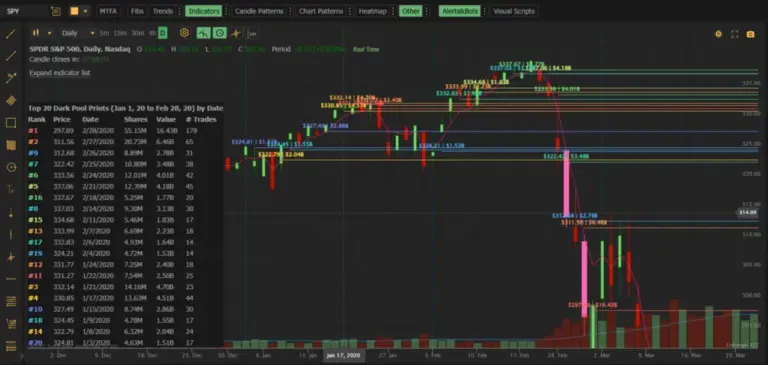
Moby Tick is the better fit for traders who care most about dark pool and block trade intelligence, institutional print context, and historical price-level research. Unusual Whales appears to be a better fit for traders who want a broader platform spanning options flow, dark pool data, stock activity, news, and other adjacent datasets and tools.
So the real question is not “which one has more stuff?” The better question is: which workflow actually matches how you trade?
Quick verdict
Choose Moby Tick if you want:
- A platform that stays centered on dark pool and block trade intelligence
- Historical research around exact institutional price levels
- A more specialized workflow for ticker-level dark pool analysis
- A cleaner dark-pool-first lens instead of a giant multi-tool surface
- A free discovery layer through darkpoolheatmap.com
Choose Unusual Whales if you want:
- A broader market-intelligence platform with many different data surfaces
- Options flow and dark pool data in the same environment
- A toolkit that extends beyond dark pool data into news and other market datasets
- A wider platform surface that can support several trader workflows in one place
Moby Tick vs Unusual Whales: side-by-side comparison
| Category | Moby Tick | Unusual Whales |
|---|---|---|
| Core angle | Dark pool and block trade intelligence for retail traders | Broad market-intelligence platform with options flow, dark pool data, and adjacent tools |
| Best for | Traders focused on institutional prints, dark pool levels, and ticker research | Traders who want broad data coverage in one platform |
| Dark pool focus | Core identity | One major feature among a wider toolset |
| Options flow breadth | More specialized dark-pool lens | Publicly positioned as a broad options-flow + market-data platform |
| Historical research | Strong fit for dark-pool-specific historical review | Broad market research surface with multiple data types |
| Adjacent tools | Narrower by design | Appears much broader: news, politics/congressional tracking, APIs, and other platform features |
| Free discovery surface | darkpoolheatmap.com | Broad public-facing content and platform surface |
| Ideal user | Trader who wants specialized dark pool research | Trader who wants many market data categories in one place |
Note: This comparison uses publicly visible search/index signals for platform positioning. Exact plan packaging and pricing should be verified directly before publication.
Which platform is better for dark pool data?
If your main goal is dark pool analysis, Moby Tick has the cleaner argument.
The product is easier to frame around one core problem: helping retail traders study institutional prints, block trades, and price levels in a more focused way. That narrower identity is useful because it keeps the workflow aligned with the trader’s actual question: where have institutions been active, and how does that history matter now?
Unusual Whales also clearly offers dark pool data. Publicly surfaced pages and snippets describe it as a platform with options flow, dark pool data, and market analysis tools. So this is not a comparison between a dark pool tool and a platform with no dark pool feature.
The difference is emphasis.
Unusual Whales looks broader. Moby Tick looks narrower and more specialized.
That means:
- If you want dark pool data to be a primary research input, Moby Tick looks more aligned.
- If you want dark pool data to be one part of a larger multi-dataset workflow, Unusual Whales may fit better.
Which platform is better for breadth of tooling?
This is where Unusual Whales has the clearest edge in scope.
Based on publicly visible pages and search snippets, Unusual Whales appears to include:
- options flow
- dark pool data
- stock activity
- news and news-feed coverage
- congressional or politics-related tracking
- API or MCP access and other developer-oriented interfaces
That is a very different product shape from a more specialized dark-pool-first platform.
If you are the kind of trader who likes having multiple data surfaces in one place, Unusual Whales is probably more naturally appealing. If you want a wider toolkit and do not mind more breadth, that can be a legitimate advantage.
But broader is not automatically better.
Broader platforms can also create more noise. They can encourage shallow attention across many tabs instead of deeper conviction around one research process.
That is where Moby Tick has a real counter-advantage. By staying narrower, it can support a more disciplined dark pool workflow for traders who do not want to swim through a giant interface every time they research a ticker.
Which platform is better for research workflow?
The answer depends on what your starting point is.
Moby Tick is a better fit if your starting point is:
- dark pool prints
- institutional price levels
- ticker-specific dark pool history
- researching where large participants previously transacted
Unusual Whales is a better fit if your starting point is:
- options flow
- broad market-data exploration
- scanning across several kinds of datasets in one place
- wanting news, stock activity, and other features alongside flow data
That’s the real divide.
Some traders want one platform that does a lot. Some want a platform that does one thing with much better focus.
Moby Tick is stronger if you value focus. Unusual Whales is stronger if you value breadth.
Who should choose Moby Tick?
Moby Tick is the better choice for traders who:
- care most about dark pool and block trade intelligence
- want to study institutional price levels over time
- prefer a more specialized tool rather than a multi-feature market-data hub
- want their workflow centered around institutional prints, not buried inside a wider platform
- like having a free front-end exploration surface via darkpoolheatmap.com before going deeper
This is especially true for traders who already know that dark pool data is a core part of how they evaluate stocks and ETFs.
Who should choose Unusual Whales?
Unusual Whales is the better choice for traders who:
- want a broad market-intelligence platform
- use options flow as a major part of their workflow
- prefer having dark pool data, news, and other tools inside one environment
- want a wider feature surface instead of a niche-specific product
- may value API, MCP, or broader data-access tooling around the platform
If your personality as a trader is “give me as much relevant market data in one place as possible,” Unusual Whales has a more obvious pitch.
Pricing and value
This section should stay conservative until exact pricing is verified directly from current public plan pages.
From this research pass, the important takeaway is not an exact monthly number. The more important point is workflow fit per dollar.
A platform with more categories of data is not necessarily better value if the user only deeply uses one of them.
And a specialized platform is not automatically narrow in a bad way if it does the exact research job the trader cares about most.
That’s why this comparison is stronger when it focuses on trader fit, not fake certainty about value rankings.
Frequently asked questions
Is Moby Tick better than Unusual Whales for dark pool data?
If your main priority is dark-pool-specific research, institutional print context, and historical price-level analysis, Moby Tick is the stronger fit. If you want dark pool data inside a broader multi-tool platform, Unusual Whales may fit better.
Does Unusual Whales include dark pool data?
Yes. Publicly surfaced Unusual Whales pages and search snippets clearly position the platform as offering options flow, dark pool data, and other market analysis tools.
What’s the biggest difference between Moby Tick and Unusual Whales?
The biggest difference is scope. Moby Tick is easier to frame as a dark-pool-focused research platform. Unusual Whales appears to be a much broader market-data and options-flow platform.
Which platform is better for retail traders?
That depends on the trader. If someone wants a focused dark pool research workflow, Moby Tick looks better aligned. If someone wants a wide, all-in-one data surface spanning several market categories, Unusual Whales may be the better fit.
Is broader always better?
No. Broader platforms can be more powerful, but they can also create more noise. For some traders, a narrower platform with a clearer purpose leads to better decisions.
What if I want to explore dark pool activity before paying for anything?
A free utility like darkpoolheatmap.com is the low-friction starting point. It gives traders a way to explore sector and ticker-level dark pool activity before stepping into a deeper paid workflow.
Final verdict
This comparison comes down to focus vs breadth.
If you want a dark-pool-first research product centered on institutional prints, historical levels, and ticker-specific workflow, Moby Tick is the better fit.
If you want a broader market-intelligence platform with options flow, dark pool data, news, and other datasets all under one roof, Unusual Whales may be the better fit.
For traders who specifically want to understand institutional dark pool activity without getting lost in a giant multi-tool stack, Moby Tick has the cleaner proposition.
Start with free exploration: darkpoolheatmap.com
Go deeper into dark pool research: mobyticktrading.com
—
Want to go deeper?
Explore Moby Tick or start with the free tool at darkpoolheatmap.com.